
Clients who run apps with a managed service provider ask the same question every month: why is the cloud bill this high, and what can we do about it? Most providers answer it ad hoc, with a spreadsheet pulled together at month end. That is work you are already doing for free.
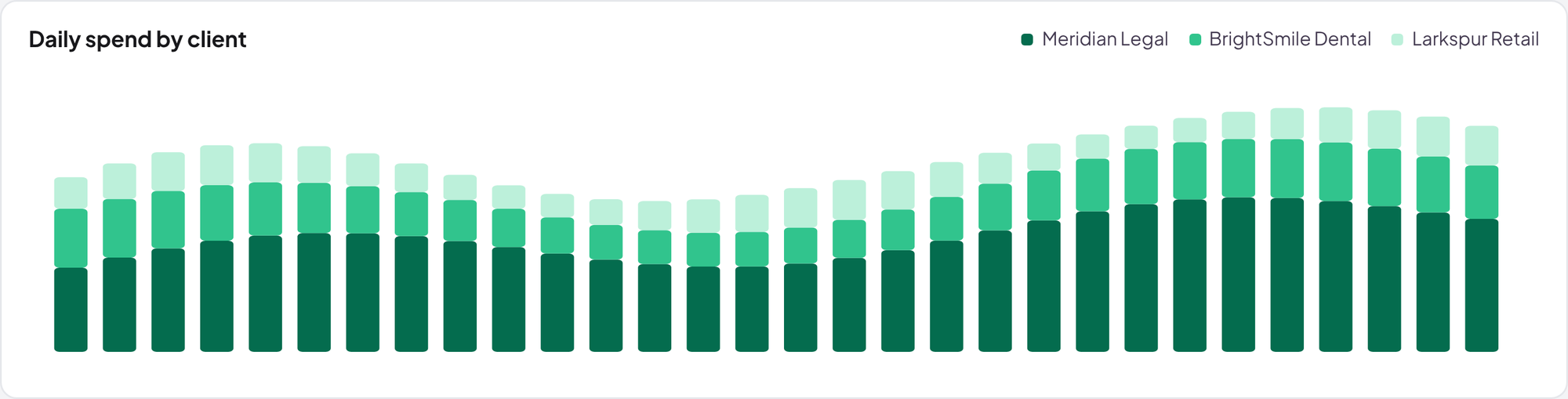
With cost per client and per app available every day, the same work becomes a service with a line on the contract.
Three services, one data set
Showback
A monthly report on each client's desk: what they spent, on which apps, and how it compares with last month. It costs you little to produce once the numbers are already split by client, and it answers the question before the client asks it.
Chargeback
If you pay the cloud bill and invoice clients for it, chargeback turns allocated cost into invoice lines. Whether you bill at cost or add a margin is your commercial decision; Shipfast supplies the numbers, not the invoice.
Optimisation reviews
A quarterly session with each client: what was cut, what it saved, and what to look at next. This is the service clients value most, because it pays for itself.
Where the savings come from
- Right-sizing: services requesting far more CPU and memory than they use.
- Idle environments: preview and test apps nobody has opened in weeks.
- Scale to zero: queue workers that run all night with nothing to do, scaled with KEDA instead.
Shipfast's AI suggests these per client with the monthly saving for each, so a review starts with a list rather than an investigation.
Pricing the service
Providers price cost services in a few common ways: a fixed monthly fee per client, a fee per application, or a share of the savings found. A share of savings is the easiest to sell, because the client only pays when it works. A fixed fee is the easiest to forecast. Many providers start with savings share to win the client and move to a fixed fee once the obvious waste is gone.
Making it repeatable
- Give each client their own cluster, or their own applications on a shared cluster. Shipfast allocates cost either way.
- Set a budget per client with an alert before month end.
- Export the month's numbers for the showback report.
- Book the quarterly review and bring the AI's suggestions.
The data was always there. The difference is having it split by client every day, instead of rebuilding it every month. See Shipfast for MSPs.